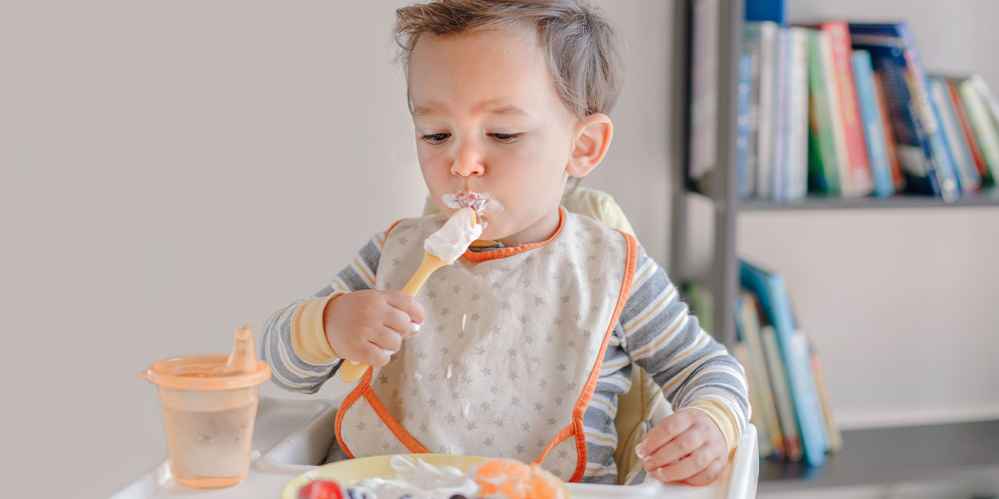



1. Why a High Chair is an Important “Development Milestone”
When a baby can sit in a high chair and eat with adults, the family’s rhythm subtly changes.
For parents, feeding is no longer about chasing after the baby with a bowl; it’s about completing a meal relatively calmly at the table. For the baby, this is the starting point for transitioning from “being fed” to “eating independently,” and a crucial period for establishing good eating habits.
A high chair is more than just a chair; it raises the baby’s gaze to the tabletop, bringing them into the family dining atmosphere and allowing them to experience the warmth and order of “eating together” earlier.
2. What is a Baby High Chair?
- A high chair is a dining seat specifically designed for infants and toddlers, usually with a fixed tray for placing utensils and food.
- The seat is usually height-adjustable, allowing caregivers to comfortably feed the baby whether sitting or standing.
For stability and safety, most high chairs are designed with a wide base and are equipped with safety belts, footrests, and other structures to reduce the risk of tipping over or slipping.
3. Around What Age Can Babies Be Considered for a High Chair?
From an age perspective, most babies gradually develop the ability to sit up independently between 4 and 6 months, but truly stable sitting often occurs closer to 6 months.
However, age is only a reference; more important is observing the baby’s body control: whether they can hold their head up for extended periods, whether their back can remain upright, and whether their sitting posture is stable and not swaying.
Only when a baby can sit steadily, without relying on pillows or adult support, are they close to the stage where they can try a high chair.
4. Key Signs That a Baby Is Sitting Stably Enough
1. Stable Head and Neck Control
- When sitting, the baby’s head and neck should naturally remain in a neutral position without needing pillow support.
- Frequent head nodding, leaning back, or tilting the head indicates that the neck and trunk strength is not yet sufficient to maintain a sitting posture for an extended period.
If the head tilts forward, backward, or noticeably to one side, it means the baby isn’t sitting steadily enough. Placing them in a high chair at this stage can lead to slipping, choking, or other risks.
2. Shoulders and Back Straightness
Observe your baby’s upper body while sitting:
- Shoulders should remain roughly straight, without shrugging or constantly slouching to one side.
- Back should be naturally upright, rather than arched or folded forward.
If the baby consistently “curls up” or “lies down” while sitting, it indicates insufficient core strength. Continue practicing in a safe environment instead of rushing into a high chair.
3. Hands “Freed”
A mature sitting posture means:
- The baby doesn’t need to brace their hands on the ground or against their sides for “fall prevention”;
- Hands can move freely, grab toys, and touch the table, with attention no longer solely focused on “maintaining balance.”
When hands are truly engaged in exploration, rather than being used for body support, it indicates that core strength and posture control have reached the level required for a high chair.
5. Sitting Posture and Swallowing: Why “Don’t Rush to a High Chair If Your Baby Can’t Sit Steadily”
If your baby can’t even sit independently, they are not suitable to start solid foods, let alone sit in a high chair for extended periods.
When the head and shoulders are noticeably tilted to one side, the airway is not open enough, and the bent neck makes it difficult for them to move food smoothly and coordinate swallowing, increasing the risk of choking and swallowing.
Adults can do a small experiment: look down at their knees and try to swallow; they will find it strenuous and uncomfortable—this is the real experience of a baby eating in a poor sitting posture.
6. The Transition from “Practicing Sitting” to “Sitting in a High Chair”
Before actually using a high chair, let your baby practice sitting in a safe environment (playmat, playpen, soft cushion):
- Supervise throughout, providing appropriate support from behind or sides when necessary, but do not “hold” them while they sit.
- Give your baby some toys so they can practice reaching for objects, turning around, and finding targets while practicing sitting.
As your baby practices more, their core muscles will gradually strengthen. One day, you’ll find they can sit steadily for a period of time – this is the perfect time to transition to a high chair.
7. Preparatory Steps for Parents Before Using a High Chair
Before actually placing your baby in the high chair, caregivers should familiarize themselves with all the details of this “tool.”
- Repeatedly operate the leg latches and tray buckles, ensuring you can identify the location and direction of force for each button even with your eyes closed.
- Understand how to adjust, fasten, and unfasten the safety belt, as well as the specific steps for folding and unfolding the high chair.
Only when adults are quick and skilled can they protect their child in an emergency, rather than being “stuck” by the complex structure.
8. Key Safety Factors to Consider When Choosing a High Chair
- Prioritize certified products that meet current safety standards, and avoid secondhand high chairs of unknown origin or with outdated structures.
- Check that the base is wide enough and the structure is sturdy, avoiding chairs that wobble or tilt easily. Before each use, always check: Is the tray securely fastened? Is the chair body deformed? Is the safety belt intact and not loose? Make this a habit.
9. High Chair Placement and Environmental Safety
Even the sturdiest high chair can be dangerous if placed incorrectly.
- Do not place the high chair too close to the countertop, table, or wall, otherwise the baby can use it as leverage to kick, causing the chair to tip over.
- Maintain a “visible but out-of-reach” distance from the dining table: Be able to see family members but not reach dangerous items such as hot soup, knives, or glasses.
The living room and dining room floors should be level. Avoid placing the high chair on uneven or sloping surfaces to prevent overall imbalance.
10. Basic Rules for Using a High Chair
1. The Safety Belt is Not an “Optional”
- Always fasten the 3-point or 5-point safety belt to ensure your baby is stable and doesn’t slip or climb out of the chair.
- Many accidents occur because babies try to stand up or climb in the chair when the safety belt isn’t used correctly.
The tray is not a substitute for the safety belt; it can only hold food and toys and does not prevent children from slipping underneath.
2. Never Leave Your Eyes and Attention
When your baby is in the high chair, an adult should always be nearby, paying close attention to their movements and mood.
Even if it’s just a quick trip to the kitchen to get something, try to keep it short and avoid leaving your child alone in the high chair for extended periods.
3. Prepare in Advance so your baby doesn’t “wait idly”
Before putting your baby in the high chair, prepare the essentials such as water, tissues, utensils, and food.
This reduces the need for adults to frequently leave their seats and helps the baby gradually learn that sitting at the table means “it’s mealtime.”
11. Don’t Ignore the Footrest
The footrest of the high chair is not just for decoration; it’s a crucial support point.
- When the baby’s feet are firmly planted on the footrest, their body is more stable, and core strength is engaged more naturally.
- If the legs are dangling, it can easily cause tension, forward leaning, and even affect swallowing coordination.
Choose a high chair with an adjustable footrest, gradually raising it as the baby grows to provide consistent and suitable support.
12. Sitting Steadily is Key to Good Eating: The Relationship Between High Chairs and Complementary Foods
When a baby can sit independently and maintain a good head, neck, and shoulders position, it’s the appropriate stage to start introducing solid or semi-solid foods.
If you’re constantly trying to straighten your baby’s body while feeding them, it means they’re not ready yet. Forcing complementary foods at this stage can easily cause choking, reluctance to eat, or fear of food.
Using a high chair with age-appropriate complementary foods not only facilitates safe swallowing but also helps children understand that eating is a meaningful activity with a place, a ritual, and a beginning and an end.
13. Make the High Chair Part of the Family Dining Table
As your baby gradually gets used to sitting in a high chair, consider placing it next to the family dining table, allowing them to participate in family mealtimes from the beginning.
Watching adults pick up food, chat, and raise their glasses, children will learn to chew, wait, and take turns through observation and imitation—far more valuable than simply being fed.
In this daily routine, the dining chair is no longer a cold tool, but a part of the child’s growing memories: from here, he sits up straight for the first time, chews seriously for the first time, and truly becomes “a member of the dining table” for the first time.